

Nervous System Resets: 2 Simple Ways to Calm Your Mind (Without Traditional Meditation)
- Danielle Strano
- Mar 1
- 6 min read

I’ve spent so many nights staring at the ceiling, my heart hammering against my ribs like a trapped bird, feeling like my own body was a house I didn’t quite belong in anymore... maybe you know that feeling, too? That buzzing, electric sense of "on-edge-ness" that just won't quit, no matter how many times someone tells you to "just relax" or "take a deep breath."
When I was first navigating my own healing journey, the word "meditation" felt like a personal attack. People would suggest sitting in a quiet room, closing my eyes, and focusing on my breath. But for me: and for so many of us in early recovery or living with the echoes of trauma: stillness didn't feel like peace. It felt like a trap. It felt like opening the door to every scary thought and painful memory I’d been trying to outrun.
If you’ve ever tried to meditate and ended up feeling more anxious, I want you to hear this right now: It is not your fault. You aren’t doing it wrong. Your nervous system is simply doing its job: trying to keep you safe in the only way it knows how.
Today, I want to invite you into a different way of thinking about "calm." We’re going to explore how to reset your nervous system using gentle, somatic tools that don't require you to sit still or clear your mind. We’re moving away from the pressure of "Zen" and moving toward the relief of safety.
Why Traditional Meditation Can Feel So Hard
It’s natural to feel frustrated when the tools that seem to work for everyone else don't work for you. But there’s a biological reason for this. When we’ve experienced high levels of stress, trauma, or the rollercoaster of addiction, our nervous system often gets stuck in a state of hyper-vigilance.
Your body is essentially a biological blueprint designed for survival. In this state, your brain is constantly scanning for threats: even when you’re physically safe. When you close your eyes and try to sit still, your internal "alarm system" might actually ramp up because it feels vulnerable. It’s like a scout being told to take a nap in the middle of a battlefield. Of course your heart starts racing!
Instead of forcing ourselves into a practice that feels threatening, we can use "resets": quick, physiological "hacks" that signal to the brain that the storm has passed. These are gentle invitations for your body to move from the "fight or flight" (sympathetic) state into the "rest and digest" (parasympathetic) state.
Tool #1: The Physiological Sigh (The "Quick Brake")
One of the most profound and scientifically backed ways to lower your heart rate almost instantly is something called the Physiological Sigh. I love this tool because it’s something your body actually does naturally when you’re sleeping or after you’ve had a good cry. It’s a built-in "reset button" for your lungs and your brain.
Here is how I invite you to try it:
The Double Inhale: Take a deep breath in through your nose, and just when you think your lungs are full, sneak in one more tiny, sharp inhale to fully expand those little air sacs (the alveoli) in your lungs.
The Long Exhale: Release the breath through your mouth with a very slow, sighing sound: like you’re letting air out of a balloon. Make the exhale much longer than the inhale.
Why does this work? That second little "pop" of air on the inhale re-inflates the parts of your lungs that might have collapsed under stress. The long, slow exhale then allows your body to offload carbon dioxide more efficiently, which signals to the brain that it’s okay to slow the heart rate down.
It’s a physical signal of safety. You aren't telling your mind to be calm; you are showing your body it is safe, and the mind follows. You can do this anywhere: in your car, in a bathroom stall, or while waiting in line: and no one even has to know you’re doing it.
Tool #2: Color Naming (The Grounding Anchor)
When we are overwhelmed or feeling hyper-vigilant, our focus tends to pull inward toward the chaos, or way out into the future toward "what-if" scenarios. We lose contact with the "here and now."
Color Naming is a beautiful, gentle way to bring your awareness back to the present moment without having to confront your internal feelings head-on. It’s a way of saying to your brain, "Look, we are right here. In this room. With these objects."
Try this the next time you feel a spike of anxiety:
Pick a color: let’s say, green.
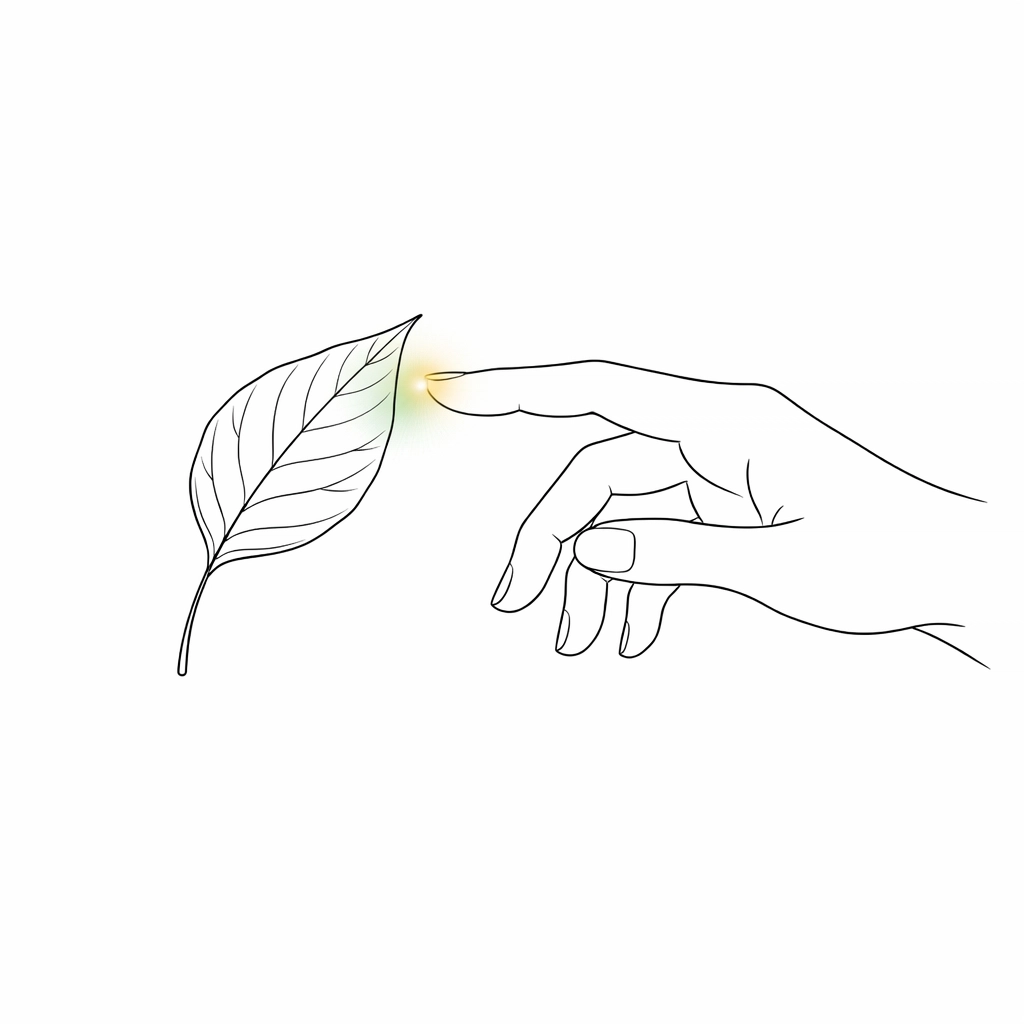
Look around your immediate environment and find five things that are green.
Name them out loud (or in your head if you're in public): The leaves on that plant, the spine of that book, the stripe on my rug, the moss in the garden, the pen on my desk.
Notice the different shades. Is it a bright lime? A deep forest green?
This simple act of external observation shifts your brain's processing from the emotional centers (the amygdala) to the logical, observational centers (the prefrontal cortex). It acts as an anchor, tethering you to the physical world when the emotional world feels like it’s spinning out of control.
Healing the Root, Not Just the Symptoms
While these resets are amazing for managing the "right now," they are even more powerful when they’re part of a larger journey toward root-cause healing. At 2 of Hearts Healing Center, we believe that recovery isn't just about stopping a behavior: it’s about creating a life where you no longer feel the desperate need to escape your own skin.
Sometimes, the "wiring" of our nervous system is tied to old blueprints: childhood patterns, stored trauma, or spiritual blocks that keep us in a loop of overwhelm. We have to walk alongside those parts of ourselves with deep compassion to truly transform.
If you find yourself thinking, "I need more than just a breathing exercise," I want you to know there is space for you here. For those who are ready to dive into the deep waters of transformation, our VIP Radiant Recovery program is designed to help you rebuild your life from the inside out. It’s a nurturing, intensive path for those who are ready to move beyond just "surviving" and into a state of true radiance.
You Are Not Alone in This
I know that the path of recovery and healing can feel incredibly lonely... but you don't have to carry the weight of your history all by yourself. Sometimes we just need a community that "gets it": people who understand that some days, just doing a physiological sigh is a massive victory.
That’s exactly why we created the 2 of Hearts Recovery Foundation. We are committed to providing accessible, heart-centered community support for anyone who needs it. Whether you are in the "messy middle" of early recovery or you’ve been on this path for years, we believe in holding space for your growth.
A Gentle Reminder for Your Heart
As you go through your week, I invite you to be incredibly gentle with yourself. If you forget to use these tools, that’s okay. If you try them and still feel a little bit shaky, that’s okay too. Healing isn't a straight line; it's a series of ripples, some small and some profound.
Your role in your own healing matters. Every time you choose to take a long exhale or notice a green leaf instead of spiraling into a panic, you are casting a vote for your own well-being. You are teaching your nervous system that it is finally safe to come home.
There is hope, and you are far more capable than you realize. Your inherent worthiness isn't something you have to earn: it’s something you already possess, even on the days when you feel the most overwhelmed.
If you’re looking for more ways to support your journey, feel free to explore our booking services or check out our other blog posts for more tips on holistic healing.
We’re walking this path right beside you... one breath at a time. ✨
Let’s Connect
What color did you choose for your grounding exercise today? How did it feel to take that double inhale? I’d love to hear about your experience. Remember, we are in this together.
With love and light,
Danielle Freeman Healer CEO, 2 of Hearts Healing Center


Comments